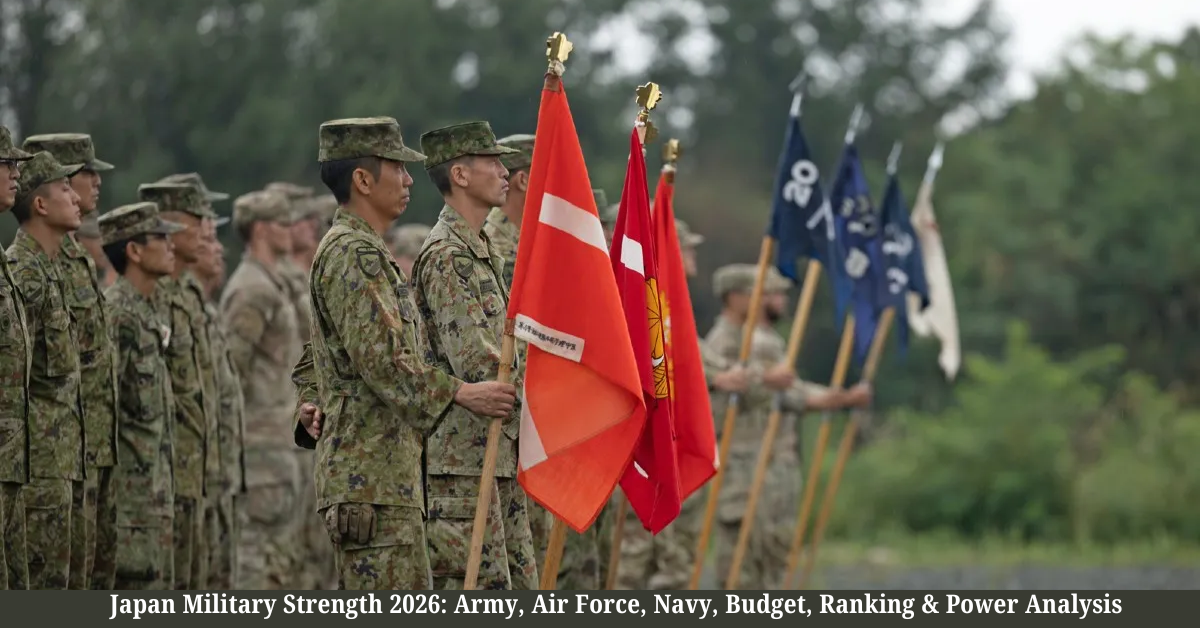
In 2026, Japan Military Strength continues to rank among the most advanced and powerful defense systems in the world. Although Japan still follows a defensive military policy under its post-World War II constitution, the country has transformed the Japan Self-Defense Forces (JSDF) into a highly modern, technologically advanced, and combat-ready force.
Rising security challenges across the Indo-Pacific region, increasing Chinese naval activity, North Korean missile threats, and regional geopolitical tensions have pushed Japan to rapidly upgrade its military capabilities in recent years. As a result, the country is now focusing heavily on strengthening national defense, improving rapid-response systems, and expanding long-range deterrence capabilities.
Today, the Japanese military operates some of the world’s most advanced fighter jets, stealth technologies, guided missile defense systems, destroyers, submarines, cyber warfare divisions, and surveillance networks. Japan also maintains one of the strongest and most sophisticated naval forces in Asia, giving it a major strategic advantage in maritime security and regional defense operations.
According to the 2026 Global Firepower Index, Japan remains among the top military powers globally. The country continues to increase investment in defense modernization, including artificial intelligence, autonomous drones, space defense systems, hypersonic weapons research, cybersecurity infrastructure, and next-generation combat technology designed for future warfare.
Japan Military Ranking 2026
In the 2026 Global Firepower Index, Japan Military Ranking stands at 7th position out of 145 countries, highlighting the country’s status as one of the most advanced military powers in the world. Japan holds a strong Power Index score of 0.1876, reflecting its exceptional defense technology, naval dominance, air power, and highly trained military forces.
Even with constitutional limitations that focus mainly on self-defense, Japan has successfully built a modern and highly capable military structure designed for rapid response, maritime security, homeland protection, and regional deterrence across the Indo-Pacific region.
Japan’s military strategy relies heavily on advanced technology, intelligence systems, missile defense networks, cyber warfare capabilities, and precision-based combat operations rather than maintaining extremely large troop numbers. This approach allows the country to remain one of Asia’s most powerful defense forces.
Japan Military Ranking Overview 2026
| Category | Details |
|---|---|
| Global Ranking | 7th |
| Power Index Score | 0.1876 |
| Active Military Personnel | 251,500 |
| Reserve Personnel | 56,000 |
| Total Military Personnel | 332,500 |
| Defense Budget | $58 Billion |
| Total Aircraft | 1,429 |
| Naval Assets | 158 |
| Submarines | 23 |
| Destroyers | 41 |
One of the biggest strengths of the Japanese military is its focus on high-quality defense systems, advanced training standards, modern warships, stealth aircraft, and sophisticated surveillance technology. The country also continues to invest heavily in next-generation military modernization, including artificial intelligence, autonomous drones, missile interception systems, and long-range strike capabilities.
Overview of Japan Self-Defense Forces (JSDF)
The official military force of Japan is known as the Japan Self-Defense Forces (JSDF). Although the country follows a defense-oriented military policy, the JSDF has become one of the most technologically advanced and disciplined armed forces in the world.
The Japanese military is divided into three major branches, each responsible for different areas of national security and defense operations.
Main Branches of Japan Self-Defense Forces
| Military Branch | Role |
|---|---|
| Japan Ground Self-Defense Force (JGSDF) | Handles land-based military operations, homeland protection, and island defense |
| Japan Maritime Self-Defense Force (JMSDF) | Responsible for naval warfare, maritime security, and protection of sea routes |
| Japan Air Self-Defense Force (JASDF) | Manages air defense, fighter aircraft operations, and airspace protection |
The Japan Self-Defense Forces mainly focus on strengthening national security and protecting the country from modern regional threats. Their key responsibilities include:
- Homeland defense
- Missile interception systems
- Maritime security operations
- Airspace surveillance and protection
- Remote island defense
- Cybersecurity and cyber warfare
- Disaster relief and emergency response
- Regional deterrence and strategic defense
Over the past decade, Japan has steadily moved toward a more proactive and modern defense strategy. Rising geopolitical tensions in East Asia, growing Chinese military activity, North Korean missile launches, and increasing security concerns in the Indo-Pacific region have pushed Japan to expand and modernize its military capabilities faster than ever before.
Today, the JSDF is widely recognized for its advanced technology, rapid-response capabilities, strong naval power, and highly trained defense personnel.
Japan Army Strength 2026
The Japan Ground Self-Defense Force (JGSDF) is considered one of the most disciplined and technologically advanced land forces in Asia. While Japan does not maintain a massive army like China or India, its military strategy focuses more on mobility, advanced defense systems, rapid deployment, and high-tech warfare capabilities.
The Japanese army is specially designed to respond quickly to modern regional threats, particularly in remote island regions and coastal defense zones. In recent years, Japan has significantly upgraded its land warfare systems to strengthen national security amid rising tensions in the Indo-Pacific region.
The Japan Army mainly focuses on:
- Rapid deployment operations
- Island and coastal defense
- Anti-ship missile systems
- Mobile combat warfare
- Advanced air defense systems
- Electronic warfare capabilities
Japan Army Personnel and Equipment
| Army Category | Numbers |
|---|---|
| Army Personnel | 206,700 |
| Main Battle Tanks | 734 |
| Armored Vehicles | 54,390 |
| Self-Propelled Artillery | 193 |
| Towed Artillery | 480 |
| Rocket Artillery Systems | 99 |
Japan operates several highly advanced armored combat platforms that are built for speed, precision, and modern battlefield conditions. Some of the country’s most powerful military vehicles include:
- Type 10 Main Battle Tank
- Type 90 Tank
- Type 16 Maneuver Combat Vehicle
The Japanese Ground Self-Defense Force is especially prepared for defending remote islands, countering amphibious threats, and responding rapidly to maritime security challenges. Its combination of modern technology, mobility, and advanced missile systems makes Japan’s army one of the strongest defensive land forces in the Asia-Pacific region.
Strength of Japan’s Ground Forces
One of the biggest strengths of the Japan Ground Self-Defense Force (JGSDF) is its strong focus on mobility, modernization, and advanced battlefield technology. Unlike many countries that still rely heavily on large traditional armored formations, Japan has built a military structure designed for fast response, precision operations, and modern defensive warfare.
The Japanese army prioritizes highly mobile combat systems that can quickly respond to threats across islands, coastal regions, and strategic defense zones. This approach allows Japan to react faster to regional security challenges while maintaining a technologically superior defense force.
Japan’s ground forces mainly focus on:
- Precision-based warfare systems
- Smart defense technologies
- Lightweight and mobile combat vehicles
- Advanced surveillance and reconnaissance
- Drone integration and unmanned systems
The country is also rapidly improving its missile defense and coastal strike capabilities. Japan has been strengthening advanced anti-ship missile systems designed to counter enemy naval movements near Japanese waters and remote islands. These systems play a major role in protecting strategic maritime routes and strengthening regional deterrence in the Indo-Pacific region.
With its combination of modern equipment, intelligent warfare systems, rapid deployment capabilities, and highly trained personnel, the Japan Army Strength 2026 remains one of the most advanced defensive ground forces in Asia.
Japan Air Force Strength 2026
The Japan Air Self-Defense Force (JASDF) is widely recognized as one of the most powerful and technologically advanced air forces in Asia. It plays a critical role in protecting Japanese airspace, monitoring regional threats, and carrying out surveillance missions across the Indo-Pacific region.
With rising military activity in East Asia, Japan has continued to modernize its air power by investing heavily in stealth aircraft, airborne warning systems, missile defense platforms, and next-generation combat technology. The country’s air force is designed for rapid response, high-level surveillance, and advanced aerial defense operations.
Today, the Japanese Air Force operates a large fleet of modern fighter jets, reconnaissance aircraft, transport systems, and combat helicopters that support both national defense and regional security missions.
Japan Air Force Aircraft Inventory
| Air Force Category | Total |
|---|---|
| Total Aircraft | 1,429 |
| Fighter Aircraft | 217 |
| Attack Aircraft | 47 |
| Transport Aircraft | 53 |
| Trainer Aircraft | 399 |
| Special Mission Aircraft | 135 |
| Tanker Aircraft | 10 |
| Helicopters | 583 |
| Attack Helicopters | 118 |
Japan is also rapidly expanding its fleet of fifth-generation stealth fighter jets through the acquisition of the highly advanced F-35 Lightning II aircraft. These stealth fighters significantly improve Japan’s air superiority, radar evasion capabilities, and long-range combat performance.
Major Japanese Fighter Jets
The Japan Air Self-Defense Force currently operates several advanced combat aircraft, including:
- F-35A Lightning II
- F-15J Eagle
- Mitsubishi F-2
- E-767 AWACS
- Kawasaki C-2 Transport Aircraft
In addition to its current fleet, Japan is actively working with international defense partners on a next-generation stealth fighter program aimed at replacing aging aircraft in the coming years. This future fighter project is expected to include advanced artificial intelligence systems, enhanced stealth technology, network-centric warfare capabilities, and improved long-range strike performance.
With its modern aircraft inventory, highly trained pilots, advanced radar systems, and strong air defense network, the Japan Air Force Strength 2026 continues to be one of the most capable air powers in the Asia-Pacific region.
Japan’s Air Defense Network
Japan operates one of the most advanced and sophisticated air defense networks in the world. Due to ongoing security threats from North Korean ballistic missile tests and rising regional military tensions, the country has heavily strengthened its missile interception and early warning capabilities over the years.
The Japanese air defense system is designed to detect, track, intercept, and neutralize airborne threats before they can enter or damage Japanese territory. This multilayered defense structure combines advanced radar technology, missile interception systems, naval defense platforms, and real-time surveillance networks.
Japan’s air defense structure mainly includes:
- Patriot PAC-3 missile defense systems
- Aegis missile defense destroyers
- Advanced radar surveillance networks
- Early warning and control aircraft
- Satellite-based monitoring systems
The Japan Air Self-Defense Force (JASDF) continuously monitors regional air activity and regularly scrambles fighter jets to intercept or track foreign aircraft approaching Japanese airspace. These rapid-response missions have become increasingly common due to growing military activity in the Indo-Pacific region.
Japan’s missile defense network is considered one of the strongest in Asia because of its integration of land-based interception systems, naval defense platforms, airborne surveillance aircraft, and high-speed communication networks. The country also continues investing in next-generation air defense technology, including advanced radar systems, space-based monitoring, artificial intelligence, and hypersonic missile defense research.
With its highly modernized infrastructure and rapid interception capabilities, Japan’s Air Defense Network remains a critical pillar of the country’s national security strategy in 2026.
Japan Navy Strength 2026
The Japan Maritime Self-Defense Force (JMSDF) is widely regarded as one of the most powerful and technologically advanced naval forces in the world. As an island nation heavily dependent on maritime trade and secure sea routes, Japan places enormous strategic importance on naval defense and maritime security.
In recent years, the Japanese Navy has rapidly expanded its capabilities to counter growing regional threats and strengthen security across the Indo-Pacific region. The navy focuses strongly on advanced naval warfare systems, anti-submarine operations, missile defense, and protection of critical shipping lanes.
The main priorities of the Japan Maritime Self-Defense Force include:
- Anti-submarine warfare
- Maritime patrol operations
- Sea lane and trade route protection
- Missile defense systems
- Regional naval deterrence
Japan Naval Fleet Overview
| Naval Category | Total |
|---|---|
| Total Naval Assets | 158 |
| Helicopter Carriers | 4 |
| Destroyers | 41 |
| Frigates | 8 |
| Submarines | 23 |
| Patrol Vessels | 6 |
| Mine Warfare Ships | 18 |
One of the biggest strengths of the Japanese Navy is its highly advanced destroyer fleet and modern submarine force. Japan operates some of the quietest and most sophisticated submarines in Asia, making them extremely effective for surveillance, sea denial missions, and underwater warfare.
Although Japan officially does not operate traditional aircraft carriers, several of its helicopter carriers have been upgraded to support F-35B stealth fighter jet operations. This capability significantly increases Japan’s naval air power and improves its ability to conduct long-range maritime defense missions.
The Japan Maritime Self-Defense Force is also known globally for its advanced anti-submarine warfare technology, Aegis-equipped destroyers, missile interception systems, and highly trained naval crews. Combined with modern radar systems and maritime surveillance aircraft, Japan maintains one of the strongest naval defense networks in the Asia-Pacific region.
In 2026, the Japan Navy Strength continues to play a major role in protecting national security, securing vital sea routes, and maintaining strategic balance in the Indo-Pacific region.
Japan’s Most Powerful Warships
The Japan Maritime Self-Defense Force (JMSDF) operates some of the most advanced and technologically sophisticated warships in the world. Japan’s naval fleet is specially designed for maritime defense, anti-submarine warfare, missile interception, and protection of strategic sea routes across the Indo-Pacific region.
Over the years, Japan has focused on building a highly modern naval force equipped with advanced radar systems, stealth capabilities, missile defense platforms, and next-generation submarine technology.
Some of the most powerful warships and naval platforms operated by the Japanese Navy include:
- Izumo-class helicopter destroyers
- Hyuga-class helicopter carriers
- Maya-class guided missile destroyers
- Soryu-class submarines
- Taigei-class submarines
The Izumo-class ships are among Japan’s largest naval vessels and are capable of supporting F-35B stealth fighter jet operations, significantly improving Japan’s naval aviation capabilities. Meanwhile, the Maya-class destroyers are equipped with advanced Aegis missile defense systems designed to intercept ballistic missile threats and strengthen regional air defense.
Japan’s submarine fleet is also considered one of the best in the world. The Soryu-class and newer Taigei-class submarines are known for their stealth technology, quiet operation, advanced sonar systems, and long-range operational capability. These submarines play a major role in underwater surveillance and anti-submarine warfare missions.
The Japanese Navy is globally respected for its highly advanced anti-submarine warfare capability, modern destroyer fleet, and superior maritime defense systems, making it one of the strongest naval powers in Asia.
Why Japan’s Navy Is So Important
As an island nation, Japan relies heavily on maritime trade for economic stability, energy imports, and international commerce. A large percentage of the country’s oil, gas, raw materials, and commercial goods travel through major shipping routes in the Pacific Ocean.
Because of this dependence, protecting maritime trade routes and maintaining secure sea lanes is one of Japan’s top national security priorities.
To strengthen its maritime security, Japan continues investing heavily in:
- Advanced submarine technology
- Naval missile defense systems
- Maritime patrol aircraft
- Aegis-equipped destroyers
- Underwater surveillance networks
The country is also expanding cooperation with allied naval forces and improving real-time maritime monitoring systems to counter regional security threats more effectively.
In 2026, the Japan Navy Strength remains one of the key pillars of the country’s defense strategy, helping secure trade routes, deter regional threats, and maintain stability throughout the Indo-Pacific region.
Japan Defense Budget 2026
Japan approved a record-breaking defense budget for 2026 as the country continues expanding its military modernization and national security programs. Rising regional tensions and growing geopolitical challenges in East Asia have pushed Japan to significantly strengthen its defense capabilities over the past few years.
The increase in spending reflects Japan’s long-term strategy to improve missile defense systems, naval power, air defense infrastructure, cybersecurity networks, and next-generation military technology.
Japan Military Budget 2026
| Budget Category | Amount |
|---|---|
| Total Defense Budget | $58 Billion |
| Global Defense Spending Rank | Top 10 |
| Foreign Exchange Reserves | $1.231 Trillion |
| Purchasing Power | $5.7 Trillion |
Japan’s growing military budget is mainly driven by increasing regional security concerns and the need to strengthen deterrence capabilities in the Indo-Pacific region.
Some of the biggest reasons behind Japan’s rising defense spending include:
- China-Taiwan tensions
- North Korean missile activity
- Indo-Pacific regional security concerns
- Cybersecurity and cyber warfare threats
- Space defense and satellite protection programs
A major portion of the budget is being used for advanced fighter jets, missile interception systems, naval modernization, long-range strike capabilities, artificial intelligence integration, drone technology, and space-based defense systems.
Japan is also investing heavily in strengthening cooperation with allied nations and improving rapid-response military infrastructure. The government has indicated that defense spending will likely continue increasing over the next several years as part of a broader strategy to maintain regional stability and strengthen national security.
With its expanding budget and modernization efforts, the Japan Defense Budget 2026 highlights the country’s growing focus on building one of the most advanced military forces in the Asia-Pacific region.
Japan Missile and Defense Technology
Japan is rapidly expanding its investment in modern military technology as the country prepares for evolving security challenges in the Indo-Pacific region. In recent years, the Japanese government has focused heavily on upgrading advanced defense systems, improving deterrence capabilities, and developing next-generation warfare technologies.
The country’s military modernization strategy now goes far beyond traditional defensive systems and includes advanced missile programs, artificial intelligence, cyber warfare infrastructure, and space-based security operations.
Some of the major focus areas of Japan’s defense technology programs include:
- Hypersonic weapons development
- Long-range cruise missile systems
- AI-assisted defense technologies
- Drone and unmanned warfare systems
- Electronic warfare capabilities
- Cyber defense infrastructure
- Space security and satellite protection
Japan is also working on advanced counterstrike capabilities designed to target and neutralize enemy missile launch sites if the country faces a direct threat. This includes the development and acquisition of long-range precision strike systems capable of responding rapidly during high-risk military situations.
The shift toward counterstrike capability represents one of the biggest changes in Japan’s military strategy since World War II. Traditionally, Japan maintained a strictly defense-oriented posture under its pacifist constitution. However, growing regional threats, North Korean missile activity, and rising tensions in East Asia have pushed the country toward a more proactive and technologically advanced defense policy.
Today, the Japan military modernization program focuses on combining artificial intelligence, advanced missile systems, cyber warfare, satellite monitoring, and integrated defense networks to build a future-ready military force.
With continuous investment in next-generation defense technology, Japan Missile and Defense Technology 2026 is becoming one of the most sophisticated military development programs in Asia.
Japan Military Strength Compared to China
When comparing Japan Military Strength vs China, the biggest difference lies in military size versus technological efficiency. China possesses a much larger military force in terms of manpower, naval assets, missile inventory, and overall equipment numbers. However, Japan continues to maintain several important advantages through advanced technology, superior training standards, and highly modernized defense systems.
Rather than relying on massive troop numbers, the Japanese military focuses heavily on precision warfare, rapid-response operations, advanced naval defense, and high-tech combat capabilities. This strategy allows Japan to maintain one of the most efficient and sophisticated defense forces in the Asia-Pacific region.
Some of Japan’s major military advantages over China include:
- Advanced military technology
- Superior naval quality and modernization
- Highly trained defense personnel
- Strong air defense systems
- Advanced maritime surveillance networks
- World-class anti-submarine warfare capability
Another major strategic advantage for Japan is its long-standing security alliance with the United States, which significantly strengthens regional deterrence and military cooperation in the Indo-Pacific region.
Japan vs China Military Comparison
| Category | Japan | China |
|---|---|---|
| Global Rank | 7 | 3 |
| Defense Budget | $58 Billion | Much Higher |
| Navy Technology | Very Advanced | Large Fleet |
| Air Defense | Excellent | Strong |
| Personnel | Smaller | Much Larger |
| Training Quality | Extremely High | High |
China’s military strength mainly comes from its enormous defense budget, large-scale manpower, growing aircraft carrier fleet, and rapidly expanding missile forces. On the other hand, Japan Military Strength 2026 is built around technological superiority, precision defense systems, advanced naval warfare capabilities, and elite operational readiness.
Japan’s focus on quality over quantity has helped the country remain one of the world’s most respected military powers despite having a smaller military force compared to China.
Strengths of Japan Military
The Japan Military Strength 2026 is built on advanced technology, modern defense systems, and highly trained military personnel. Even though Japan maintains a defense-oriented military policy, the country has developed one of the most capable and respected armed forces in the world.
Japan’s military strategy focuses on precision, rapid response, maritime dominance, and technological superiority rather than maintaining massive troop numbers. This approach has helped the country become a major security power in the Indo-Pacific region.
Key Strengths of Japan Military
- Highly advanced military technology
- Powerful and modern naval force
- Advanced fighter aircraft and air defense systems
- Excellent missile interception capabilities
- Strong security alliance with the United States
- Advanced radar and surveillance infrastructure
- Highly trained military personnel
- Strong domestic defense manufacturing industry
One of Japan’s biggest advantages is its combination of cutting-edge defense technology and strategic geographic position in East Asia. This gives the country a critical role in maintaining stability and security across the Indo-Pacific region.
The Japan Maritime Self-Defense Force is especially respected for its anti-submarine warfare capability, modern destroyers, and advanced maritime surveillance systems. Meanwhile, Japan’s air defense network remains one of the most sophisticated missile defense structures in the world.
Weaknesses of Japan Military
Despite its impressive strengths, the Japanese military also faces several important limitations and strategic challenges.
Key Weaknesses of Japan Military
- Constitutional restrictions on military operations
- Limited offensive military capabilities
- Heavy dependence on imported energy resources
- Smaller manpower compared to China
- Aging population impacting military recruitment
- Geographic vulnerability as an island nation
Japan’s post-World War II constitution places restrictions on certain offensive military operations, which limits the country’s ability to project military power compared to some other global powers.
Another major challenge is demographics. Japan’s aging population and declining birth rate are creating long-term recruitment concerns for the armed forces. Additionally, as an island nation heavily dependent on maritime trade and imported energy, Japan remains vulnerable to disruptions in shipping routes and regional naval tensions.
To address these weaknesses, Japan continues investing heavily in military modernization, advanced defense technology, cybersecurity, missile defense systems, and stronger regional security cooperation.
Future of Japan Military
The future of the Japan Self-Defense Forces (JSDF) is expected to focus strongly on advanced technology, automation, and next-generation warfare systems. As regional security threats continue evolving, Japan is gradually transforming its military into a more flexible, modern, and proactive defense force.
Future Focus Areas of Japan Military
- AI-powered defense systems
- Unmanned combat drones
- Hypersonic missile defense technology
- Cyber warfare capabilities
- Space security and satellite defense
- Joint military operations with allies
Japan is also strengthening defense cooperation and security partnerships with several major countries, including:
- United States
- Australia
- India
- United Kingdom
These partnerships are becoming increasingly important for maintaining regional stability, intelligence sharing, naval cooperation, and joint military exercises across the Indo-Pacific region.
Defense experts believe that Japan will continue expanding its strategic military role over the next decade, especially in areas related to maritime security, missile defense, cybersecurity, and regional deterrence.
With continuous modernization and growing investment in advanced military technology, the future of Japan Military Strength is expected to become even more influential in shaping Indo-Pacific security in the coming years.
Is Japan Military Strong in 2026?
Yes, the Japan Military Strength 2026 is considered one of the most powerful and technologically advanced defense forces in the world. Despite maintaining a largely defensive military policy under its post-World War II constitution, Japan has successfully built a highly modern and combat-ready military capable of responding to major regional security threats.
Today, Japan possesses:
- One of the world’s strongest navies
- Advanced air and missile defense systems
- Highly capable submarine fleets
- Modern stealth fighter aircraft
- Highly trained military personnel
- Strong technological and surveillance superiority
The Japan Self-Defense Forces (JSDF) are especially respected for their advanced naval warfare capabilities, missile interception systems, anti-submarine operations, and rapid-response military structure. Instead of focusing on massive troop numbers, Japan emphasizes technology, precision warfare, intelligence systems, and high operational readiness.
Japan’s military strategy mainly focuses on:
- Regional deterrence
- Rapid defensive response
- Maritime security
- Airspace protection
- Maintaining stability in the Indo-Pacific region
One of Japan’s biggest strategic advantages is its close security alliance with the United States, which further strengthens regional defense cooperation and military deterrence capabilities.
With rising geopolitical tensions in East Asia, growing Chinese military activity, and continued North Korean missile threats, Japan is expected to continue increasing defense spending and accelerating military modernization programs in the coming years.
As investment continues in artificial intelligence, missile defense, cyber warfare, space security, drones, and next-generation fighter programs, the future of Japan Military Strength is expected to become even more influential in shaping security across the Indo-Pacific region.
Japan Military Strength 2026 FAQs
What is Japan military ranking in 2026?
According to the 2026 Global Firepower Index, Japan Military Ranking 2026 stands at 7th position among the world’s strongest military powers.
How strong is Japan military in 2026?
The Japan military is considered one of the most technologically advanced and highly trained defense forces in the world, especially in naval warfare, missile defense, and air defense capabilities.
What is Japan’s defense budget in 2026?
Japan approved an estimated $58 billion defense budget for 2026 to strengthen military modernization and regional security capabilities.
Does Japan have aircraft carriers?
Japan officially operates helicopter carriers, but several of these warships have been upgraded to support F-35B stealth fighter jet operations, giving them capabilities similar to light aircraft carriers.
How many fighter jets does Japan have?
The Japan Air Self-Defense Force (JASDF) operates around 217 fighter aircraft, along with advanced surveillance, transport, and support aircraft.
How many submarines does Japan have?
Japan currently operates 23 submarines, making it one of the strongest and most advanced submarine forces in Asia.
Why is Japan increasing military spending?
Japan is increasing defense spending because of rising regional security threats, including growing Chinese military activity, North Korean missile launches, cybersecurity concerns, and increasing tensions across the Indo-Pacific region.
Conclusion
Japan’s military strength in 2026 reflects a major transformation from its traditionally defensive posture into a modern, technology-driven force prepared for future security challenges.
The country now operates one of the world’s most advanced naval fleets, highly capable air defense systems, stealth fighters, modern submarines, and sophisticated surveillance networks.
Although Japan still faces constitutional limitations and manpower challenges, its growing defense budget, advanced military technology, and strategic alliances continue to strengthen its global military position.
As tensions continue rising across the Indo-Pacific region, Japan is expected to remain one of the most important military powers shaping security and stability in Asia.